
Recyclable vs Biodegradable vs Compostable Packaging: What’s the Difference?
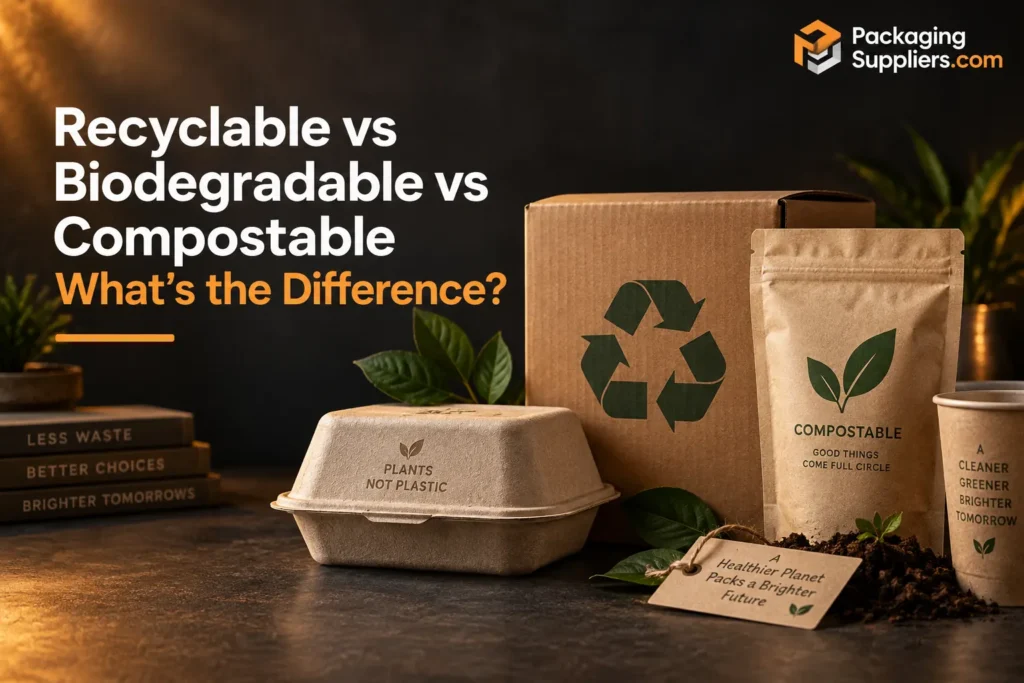
Recyclable, biodegradable and compostable describe different things. Recyclable packaging is intended to be collected, sorted and reprocessed into material for new products when an appropriate recovery system accepts it. Biodegradable describes the ability of material to break down through biological activity under specified conditions and time. Compostable packaging is designed to biodegrade and disintegrate in […]
How to Choose the Right Packaging Material for Your Product

Choose packaging material by starting with the product and the failure you must prevent. Define what the pack has to contain, protect, preserve, survive, communicate and enable; then convert those needs into measurable barrier, strength, temperature, sealing, regulatory and usability requirements. Only after that should you compare paper, corrugated, plastics, glass, metal, wood, molded fiber […]
E-Flute vs B-Flute vs C-Flute Corrugated Packaging: Which Should You Choose?
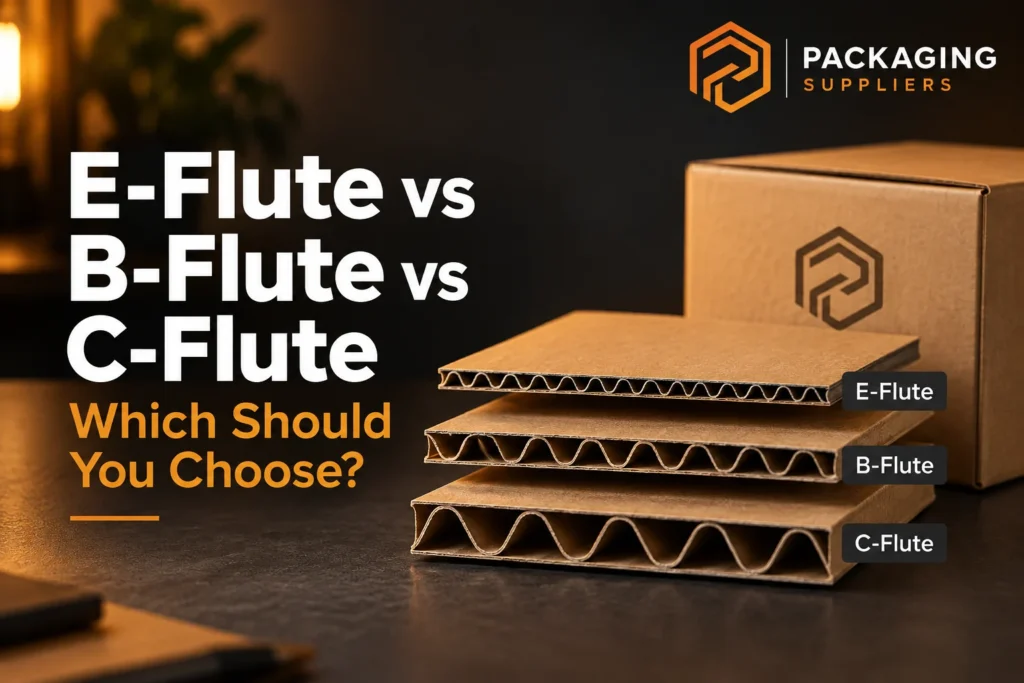
E, B and C are corrugated flute profiles: they describe the approximate geometry and spacing of the fluted paper medium, not a finished-box strength rating. E flute is a thin microflute that favors compact structures and a smoother print surface; B flute offers a useful balance of panel rigidity, flat-crush resistance and converting; C flute […]
Rigid vs Flexible Packaging: Which Should You Choose?

Rigid packaging keeps a defined shape and relies on structural walls for support; flexible packaging bends, folds or conforms and relies more heavily on films, laminates, seals and package geometry. Choose rigid when shape retention, crush resistance, pressure handling, dispensing hardware or a durable container is central. Choose flexible when low mass, efficient storage, sealability, […]
Paperboard vs Corrugated Packaging: What Is the Difference?
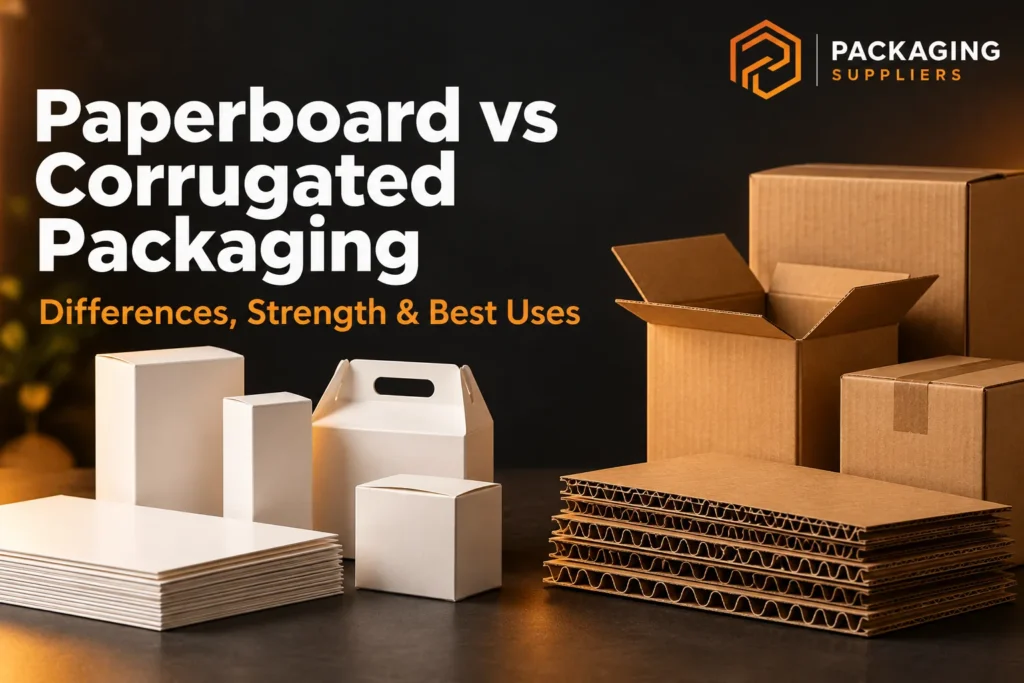
Paperboard is a solid, stiff paper-based sheet commonly converted into folding cartons, sleeves and retail packs. Corrugated packaging is a layered structure made from flat linerboards bonded to one or more fluted paper media. Paperboard is usually chosen for compact retail presentation and fine graphics; corrugated is usually chosen when cushioning, stacking strength and transport […]
Kraft Paper vs Corrugated Packaging: Differences & Best Uses
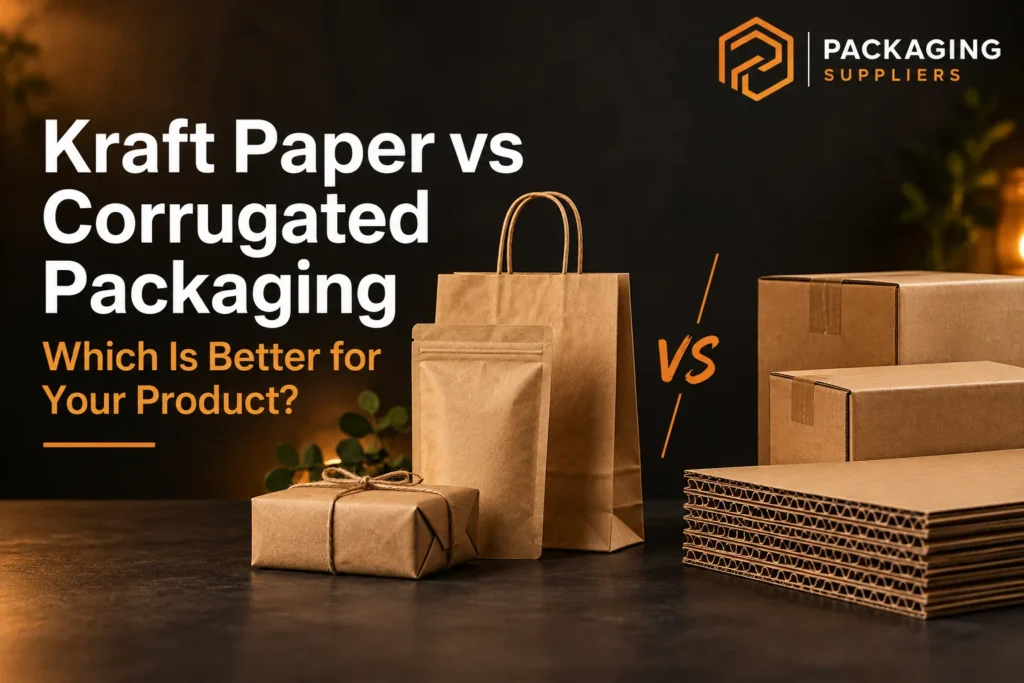
Kraft paper is usually the better fit for wraps, bags, sacks, interleaving and light protective paper. Corrugated packaging is usually the better fit when the package must form a rigid box, resist stacking loads, provide built-in cushioning or survive parcel and freight distribution. But “kraft vs corrugated” is not a perfect material-to-material comparison. Kraft describes […]
Primary, Secondary & Tertiary Packaging Explained
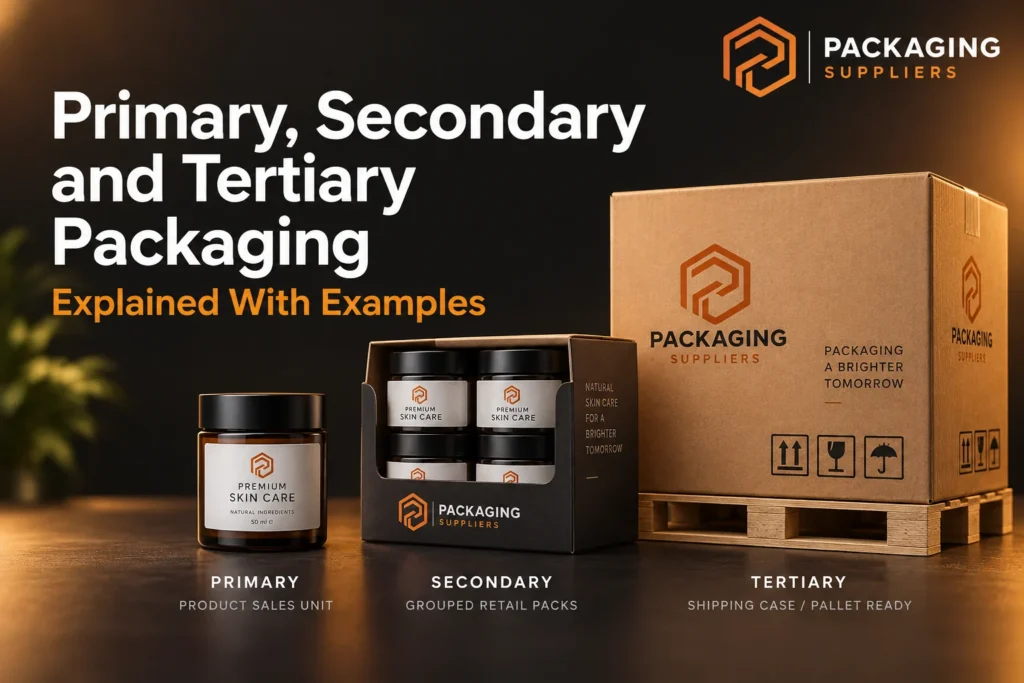
Primary, secondary and tertiary packaging describe the role a package plays in the complete packaging system. Primary packaging forms the sales unit or first enclosure around a product; secondary packaging groups or presents one or more sales units; tertiary packaging supports handling, storage and transport of those units through distribution. The terms describe function, not […]
What Is Paperboard Packaging? Types, Grades & Applications
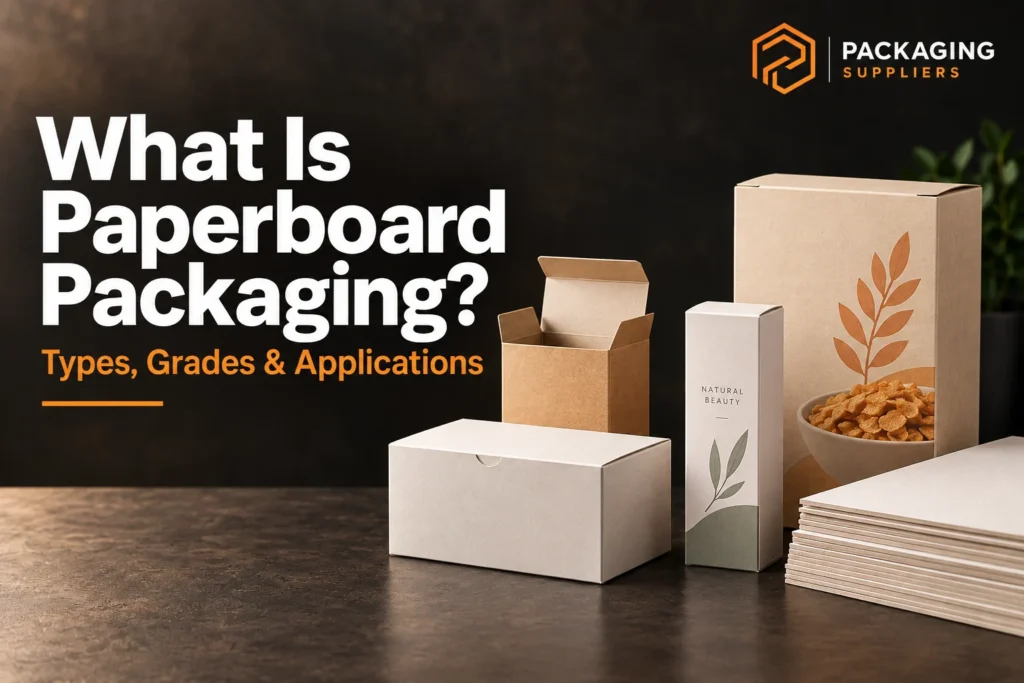
Paperboard packaging uses a relatively thick, stiff paper-based sheet that can be printed, scored, folded, die-cut and glued into cartons, sleeves, trays, cards, cups and other structures. Unlike corrugated fiberboard, ordinary paperboard does not contain a fluted medium between linerboards. Its performance comes mainly from fiber furnish, ply construction, grammage, caliper, density, stiffness, coating and […]
What Is Kraft Paper Packaging? Properties, Uses & Benefits
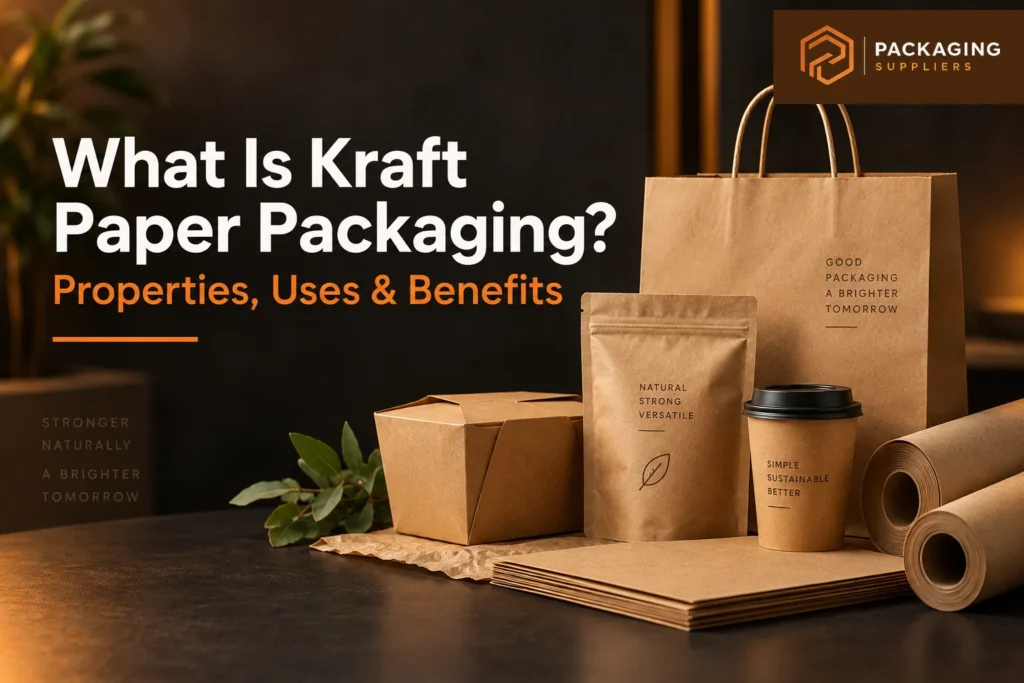
Kraft paper packaging uses strong paper or paperboard made wholly or partly from kraft (sulfate) pulp. It is commonly supplied as rolls, sheets, bags, sacks, wraps, liners, void fill, labels and converted paper structures. Natural kraft is usually brown, while bleached kraft can be white; coatings, laminations, sizing and recycled fiber can change both appearance […]
What Is Corrugated Packaging? Types, Flutes & Strength
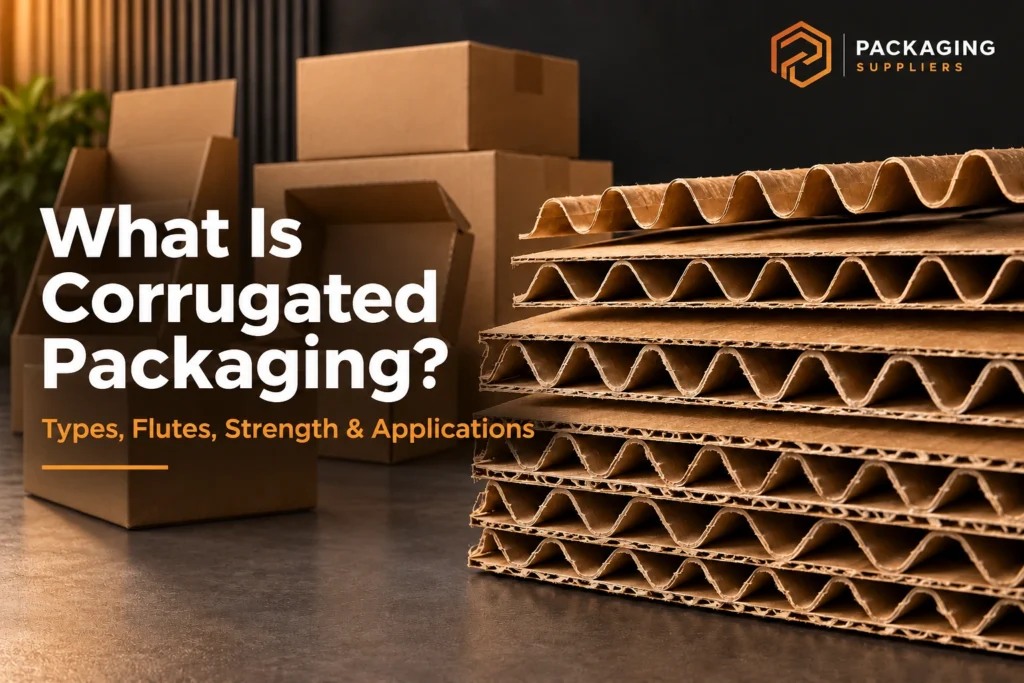
Corrugated packaging is made from corrugated fiberboard, a structure in which one or more wave-shaped paper media are bonded to flat linerboards. The flutes act like repeated arches, creating thickness, bending stiffness, cushioning and edgewise compression resistance with less fiber than a solid sheet of similar caliper. This is why corrugated board is widely used […]